Quick Answer
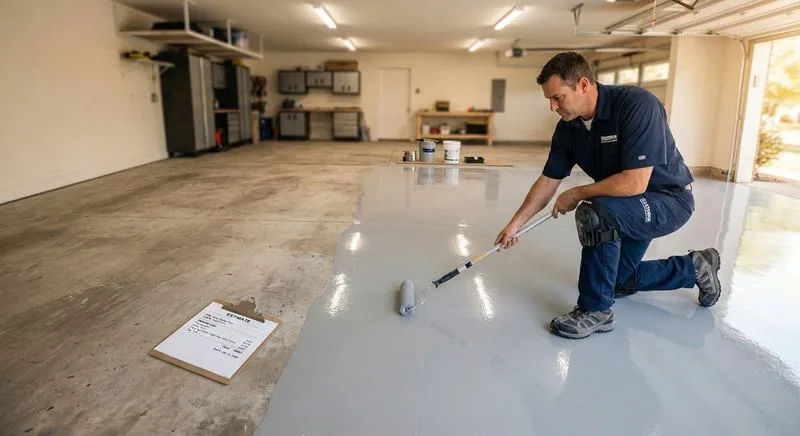
Every epoxy floor is priced after a free on-site measurement. Your price depends on:
- Size: the square footage of the space
- Slab condition: cracks, old coatings and moisture
- System and finish: solid color, flake, quartz or metallic
- Prep: the grinding and repair your concrete needs
Price Overview: Why Every Floor Is Priced On-Site
Professional epoxy flooring is priced project by project, after a free on-site estimate. The all-in price covers surface preparation (diamond grinding), crack repair, premium materials, professional application, and full cleanup. Two floors of the same size can be priced differently, because finish type, floor condition, and project complexity all move the number — not quality shortcuts.
Solid-color epoxy delivers a clean, durable, uniform surface — the most affordable professional option. Decorative flake is the most popular choice for garages and basements. Premium metallic finishes sit at the top of the range, creating one-of-a-kind three-dimensional effects.
Ready to transform your space?
Get a free, no-obligation quote from your local Ascent Epoxy team.
Get a Free QuoteStore-bought DIY kits advertise a much lower price for a full garage, but industry data shows roughly 70% of DIY applications fail within two years due to inadequate surface preparation — the most critical and most frequently skipped step. Proper diamond grinding requires industrial equipment that DIY kits don't include. Read our full DIY vs. professional comparison.
What Sets the Price by Project Type
Garage Epoxy
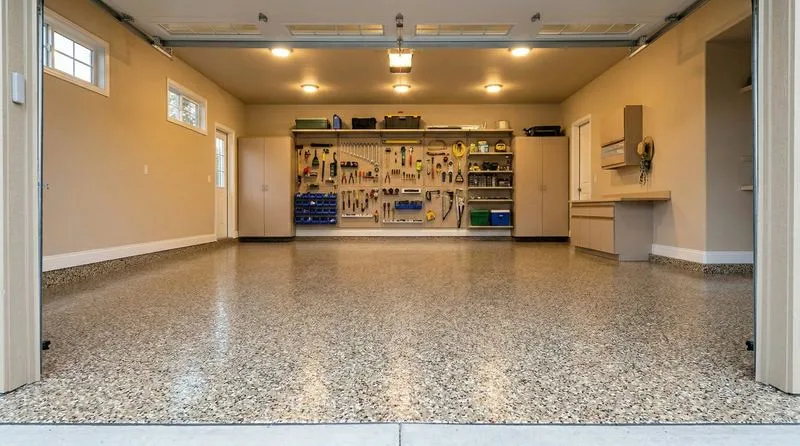
A garage is priced on its size and condition. Single-car garages are about 200–250 sq ft, a standard 2-car garage is 400–500 sq ft, and three-car garages run 600–750 sq ft — most of them finished in decorative flake. Every professional garage quote includes surface preparation, crack repair, and a multi-coat system with UV-resistant topcoat.
Garage floors frequently need moisture testing and crack repair before coating — both are included in professional quotes at no extra charge. If your garage has a previous coating (paint or sealer), it has to be removed before the new system goes down, which adds to the prep. Hot tire resistance is built into every professional garage system — the same cannot be said for DIY kits. Learn more about garage epoxy flooring.
Residential Interior
Basement, kitchen, and living area floors are priced mainly on their size and the finish you choose. A 500-square-foot basement in metallic epoxy is priced well above the same space in solid color. Kitchens and bathrooms favor quartz finishes for their slip resistance and sanitary, seamless surface.
Residential interior projects may require additional prep if the concrete has been previously covered with tile adhesive, carpet glue, or paint — all of which must be removed for proper adhesion. This is identified during the free consultation so there are no cost surprises. Explore residential epoxy options.
Commercial Spaces
Commercial projects benefit from volume pricing — larger footprints reduce the per-square-foot cost because setup, equipment transport, and crew mobilization are spread across more area. Office lobbies and showrooms requesting metallic or quartz finishes are priced higher than a standard retail floor of the same size.
For businesses that need to stay operational during installation, phased scheduling — where the floor is coated in sections across multiple days or nights — adds approximately 10–15% to the total cost. This premium covers the additional setup/teardown cycles and extended crew time. See commercial epoxy solutions.
Industrial Facilities
Industrial epoxy systems engineered for chemical resistance, forklift traffic, and thermal cycling are priced on the system your operation needs. These multi-layer systems include chemical-resistant base coats, specialized primers for high-moisture environments, anti-slip aggregate additives, and high-visibility safety line markings. Warehouse and manufacturing plant floors typically use high-build solid systems, while pharmaceutical and food processing facilities requiring FDA-compliant coatings need more specialized systems at the higher end. Explore industrial epoxy solutions.
How Your Finish Changes the Price
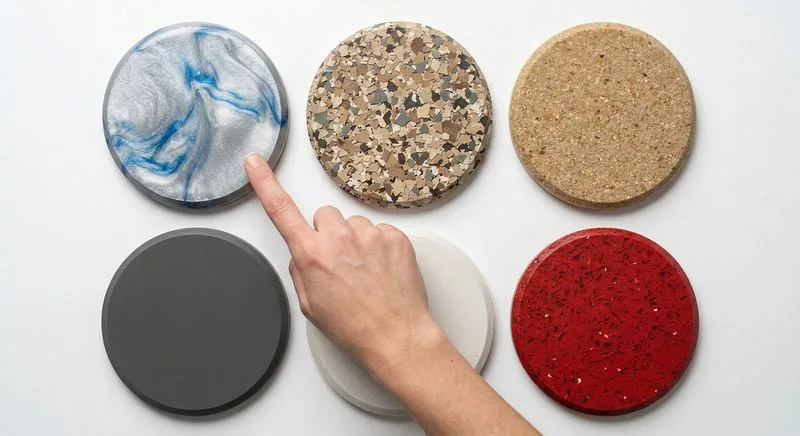
Your finish choice is the single biggest variable in your project cost. Here's how the options line up, from the most affordable to the most premium, and who each one is best for:
Clean, uniform, most affordable. Best for: garages, warehouses, utility spaces.
Textured, multi-toned, slip-resistant. Best for: garages, basements, laundry rooms. Our #1 most popular finish.
Natural stone look, maximum slip resistance. Best for: kitchens, bathrooms, commercial kitchens, pool areas.
High-gloss 3D swirl patterns, premium showpiece. Best for: basements, showrooms, luxury residential.
Logos, patterns, color zones, branded flooring. Best for: dealerships, gyms, retail, corporate spaces.
See all finish options with real project photos.
What's Included in a Professional Quote
Every Ascent Epoxy quote is an all-inclusive price — no hidden fees, no surprise line items, no "we didn't realize your floor needed this" add-ons after work begins. Here's exactly what your quote covers:
- Concrete inspection and moisture testing — we assess floor condition, identify cracks, test for moisture vapor transmission, and check for previous coatings or sealers that need removal.
- Diamond grinding surface preparation — industrial grinders mechanically profile the concrete to the precise roughness (CSP 2–3) needed for permanent epoxy adhesion. This is the most critical step and the primary reason professional installations outperform DIY.
- Crack and joint repair — all cracks, divots, spalls, and control joints are filled with professional-grade repair compound to create a smooth, even substrate.
- Primer coat — a penetrating base layer that bonds to the prepared concrete and creates a foundation for the body coat.
- Body coat with your chosen finish — the main epoxy layer with your selected color, flake, quartz, or metallic design applied.
- UV-resistant topcoat — a clear protective layer that prevents yellowing, adds chemical resistance, and provides the final gloss or matte sheen.
- Full cleanup — we leave your space clean and ready for the curing period. All grinding dust, materials, and equipment are removed.
The only factor that might add cost beyond the initial quote is extensive concrete damage or moisture issues discovered during the on-site inspection — but we identify those during the free consultation before any commitment, so the scope and price are locked in before work begins.
Six Factors That Set Your Price
Your price is set after the space is measured and the concrete is inspected. These are the six things that move it:
1. Size of the space. Larger projects have lower per-square-foot costs because equipment setup, crew mobilization, and material minimums are spread across more area. A 200 sq ft project costs more per foot than a 2,000 sq ft project using the same system. Most residential projects see the best value in the 400–800 sq ft range.
2. Slab condition and repairs. Clean, crack-free concrete in good structural condition is the least expensive to prepare. Floors with significant cracking, spalls, or structural damage need more repair work before any coating goes down.
3. Moisture. Moisture rising through the slab is what pushes a coating up into bubbles. Every floor is tested for moisture vapor transmission during the inspection, and a slab with moisture problems needs additional prep — such as a specialized primer for high-moisture concrete — before it is coated.
4. System and finish. As detailed in the comparison above, solid color is the most affordable and metallic is the most premium. The difference between a solid color system and a metallic system is mostly material cost — the labor is similar for both. Chemical-resistant industrial systems add layers and cost more again.
5. Color, flake and design choices. Standard colors and flake blends keep a project simple. Custom work — logos, patterns, color zones — takes more time and sits at the top of the range.
6. Access and prep. Ground-floor spaces with direct exterior access (like garages) are the simplest and least expensive to coat. Removing old paint or sealer is the most common added prep step, and tile adhesive or carpet glue must come up too. Upper floors, occupied commercial buildings requiring phased scheduling, spaces with limited ventilation, or projects with tight scheduling constraints add complexity that affects pricing. Phased commercial work typically adds 10–15%.
Get a Free Quote for Your Floor
Our team provides detailed, no-obligation quotes within 24 hours — including prep, materials, and installation.
Get a Free Quote (954) 852-1263Epoxy vs. Other Flooring Costs
Over a 15-year ownership period, epoxy flooring delivers the strongest value proposition for concrete subfloors. Here's how the total cost of ownership compares to common alternatives:
Ceramic tile. Tile adds ongoing grout maintenance, periodic grout sealing every 2–3 years, and eventual grout replacement. Cracked tiles require individual replacement. Over 15 years, that upkeep keeps adding to what the floor costs you. Epoxy eliminates all of these ongoing costs.
Hardwood. Hardwood requires refinishing every 5–7 years. Over 15 years, that's 2–3 refinishing cycles, each one added to the initial investment. Hardwood is also vulnerable to water damage — a single plumbing leak can destroy an entire floor. Epoxy is waterproof and never needs refinishing.
Polished concrete. Similar upfront price to epoxy, but polished concrete offers no decorative options beyond concrete's natural tones, provides less chemical resistance (vulnerable to acids and oil staining), and cannot be "re-coated" — when it wears, the entire slab must be re-ground. Read our full epoxy vs. polished concrete comparison.
Vinyl plank. Vinyl offers good aesthetics but needs full replacement every 10–15 years. It's also susceptible to gouging from heavy furniture, moisture damage at seams, and doesn't handle the chemical exposure and thermal cycling that epoxy withstands effortlessly.
Hidden Costs to Watch For
Not all epoxy quotes are created equal. When comparing estimates from different contractors, watch for these common omissions that can inflate your final bill:
- Surface prep not included. Some low-ball quotes use acid etching instead of diamond grinding, or omit prep entirely. Always confirm your quote specifies mechanical surface preparation (diamond grinding or shot blasting). Acid etching alone leads to premature failure.
- Single-coat systems. Professional epoxy is a multi-coat system (primer + body + topcoat). Quotes for "one-coat" epoxy use thinner, less durable products that won't last. Ask how many coats are included and the total dry film thickness (should be 10+ mils).
- No topcoat. The UV-resistant topcoat is what prevents yellowing and provides chemical resistance. Without it, your floor will dull and discolor within 1–2 years. Confirm your quote includes a clear topcoat.
- Travel and setup fees. Some contractors add mobilization charges, minimum project fees, or fuel surcharges separately. Ascent Epoxy quotes are all-inclusive — the price we quote is the price you pay.
Return on Investment
Real estate industry estimates credit garage epoxy flooring with adding to a home's resale value — an upgraded garage floor is one of the highest ROI home improvements available.
Beyond resale value, epoxy eliminates the ongoing cost of garage floor maintenance. No more concrete sealing every 2–3 years, crack repair service calls, or stain treatments. Over a 15-year period, these avoided maintenance costs pay back a significant portion of the installation cost.
Commercial clients see ROI through reduced cleaning labor (seamless floors clean 40% faster than tile), fewer slip-and-fall incidents (lower insurance premiums and workers' comp claims), and extended floor replacement cycles (epoxy lasts 2–3x longer than VCT or carpet in high-traffic environments). Get a free quote to see your specific ROI.
How to Get an Accurate Quote
Online cost calculators and per-square-foot estimates give you a ballpark, but the only way to get an accurate price for your specific project is a free on-site consultation. Concrete condition, moisture levels, existing coatings, and access constraints all affect pricing — and none of these can be assessed from a photo or phone call.
During your free consultation, our team inspects the concrete, discusses finish options with physical samples you can see and touch, measures the exact square footage, identifies any prep requirements, and provides a detailed written quote within 24 hours. The quote includes a line-by-line breakdown of every cost component — prep, materials, labor, and timeline — so you know exactly what you're getting.
There's no obligation, no pressure, and no sales tactics. We want you to have the information you need to make the right decision for your space and budget. Schedule your free consultation today.
