What Is Epoxy Flooring?
Epoxy flooring is a surface coating system made from a combination of resin and hardener that chemically bonds to concrete, creating a rigid, plastic-like layer. Unlike paint (which sits on top of concrete and peels), epoxy penetrates and fuses with the surface, forming a permanent bond that withstands heavy traffic, chemical spills, and impacts.
The result is a seamless, non-porous surface that resists stains, moisture, bacteria, and abrasion. It's used in residential spaces (basements, kitchens, garages), commercial environments (offices, retail, restaurants), and industrial facilities (warehouses, factories, hangars).
Epoxy coatings range from thin single-coat applications to multi-layer systems with primer, body coat, decorative elements, and topcoat. The thickness, materials, and application method determine performance — which is why professional installation dramatically outperforms DIY kits.
Types & Finishes
There are five main categories of epoxy flooring finishes, each suited to different spaces and aesthetic preferences:
Ready to transform your space?
Get a free, no-obligation quote from your local Ascent Epoxy team.
Get a Free QuoteMetallic Epoxy
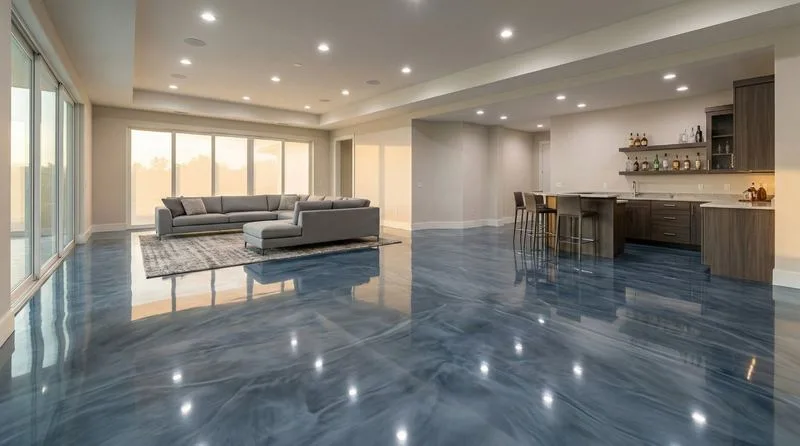
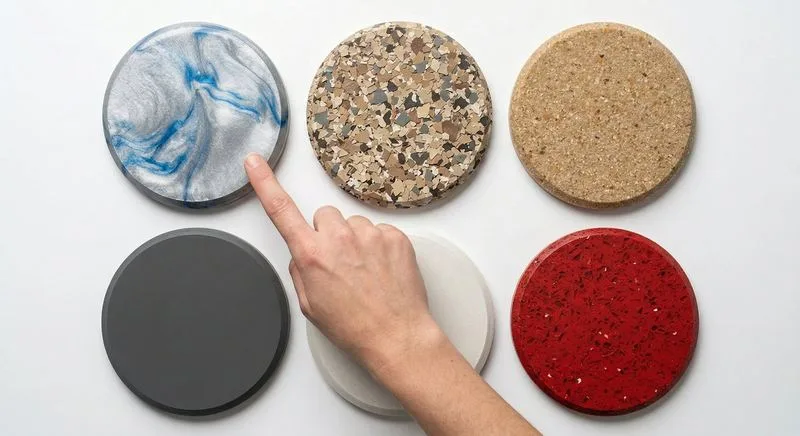
Metallic epoxy creates a three-dimensional, high-gloss finish with swirling patterns that resemble marble or flowing water. Metallic pigments are mixed into the epoxy and manipulated during application to create unique, one-of-a-kind designs. It's the premium choice for showrooms, basements, and spaces where visual impact is a priority. Cost: $8–$12 per square foot installed.
Decorative Flake
Flake epoxy (also called chip or broadcast) uses colored vinyl chips broadcast into wet epoxy to create a textured, multi-toned surface. The chips add slip resistance and hide imperfections in the concrete below. It's the most popular finish for garages and laundry rooms because it combines durability, visual appeal, and practical texture. Cost: $4–$7 per square foot.
Quartz Epoxy
Quartz systems use colored quartz granules broadcast into the coating for exceptional durability and slip resistance. The result is a natural, stone-like appearance that handles heavy traffic and chemical exposure. It's widely used in commercial kitchens, restrooms, and locker rooms where safety and sanitation are critical. Cost: $6–$10 per square foot.
Solid Color Epoxy
Solid color epoxy provides a clean, uniform, high-gloss finish in a single tone. It's the most affordable professional option and works well in garages, warehouses, and any space where a clean look matters more than decorative patterns. Available in virtually any color. Cost: $3–$5 per square foot.
Custom Designs
Custom epoxy includes logos, borders, patterns, color zones, and multi-color designs. It's popular with businesses that want branded flooring (car dealerships, gyms, retail stores) and homeowners who want a truly unique surface. Cost varies significantly by complexity. See examples in our project gallery.
How Much Does Epoxy Flooring Cost?
Most professional epoxy flooring projects cost between $3 and $12 per square foot installed. The total depends on four main factors: floor condition, square footage, finish type, and project accessibility.
For a standard 2-car garage (400–500 sq ft), expect to pay $1,500–$3,500 for a professional decorative flake installation including surface preparation, materials, and cleanup. A metallic finish in the same space runs $3,200–$6,000. Commercial projects with larger footprints benefit from lower per-square-foot pricing.
Every Ascent Epoxy quote includes diamond grinding surface prep, crack repair, premium materials, professional application, and cleanup — no hidden fees. Concrete that needs extensive moisture mitigation or structural repair will add to the base cost, but we identify that during the free consultation so there are no surprises.
Compared to other flooring options, epoxy delivers strong long-term value. It's typically 30–50% less expensive than tile or hardwood when factoring in installation labor, and it requires significantly less maintenance over its 10–30 year lifespan. Get a free quote for your specific project.
Get a Free Quote for Your Floor
Our team provides detailed, no-obligation quotes within 24 hours — including prep, materials, and installation.
Get a Free Quote (954) 852-1263The Installation Process
Professional epoxy installation follows five steps, typically completed in 1–2 days for residential projects and 2–5 days for commercial spaces:
- Inspection & consultation. The crew assesses concrete condition, identifies cracks, moisture issues, or existing coatings, and confirms the project plan and timeline.
- Surface preparation. Diamond grinding or shot blasting mechanically profiles the concrete, creating a rough texture for optimal adhesion. This is the most critical step — it's the #1 reason professional installations outperform DIY.
- Crack & joint repair. Any cracks, divots, or control joints are filled with professional-grade repair compound to create a smooth, even substrate.
- Epoxy application. The system is applied in layers: primer coat, body coat (with decorative elements if applicable), and topcoat for UV protection and additional durability.
- Curing. Light foot traffic is typically possible within 24 hours. Vehicles and heavy loads should wait 5–7 days for full chemical cure.
The entire process is dust-controlled and low-odor with modern equipment. We provide a specific timeline for your project during the free consultation. See our full installation walkthrough with photos.
Residential Epoxy Flooring
Epoxy works in any room with a concrete subfloor — basements, kitchens, bathrooms, laundry rooms, sunrooms, home gyms, and of course, garages. It's especially popular in basements (where moisture resistance prevents mold) and kitchens (where the seamless surface makes spill cleanup effortless).
For families with kids and pets, fully cured epoxy is non-toxic, hypoallergenic, and has no grout lines where bacteria or allergens can hide. Textured finishes like flake and quartz add slip resistance for wet areas. Pet claws don't scratch the surface, and even red wine spills wipe up with a damp cloth.
Garage epoxy is our most popular residential service. It transforms stained, cracked concrete into a showroom-quality surface that resists tire marks, oil, road salt, and impacts. Most garage projects are completed in a single day. Learn more about garage epoxy flooring.
Commercial & Industrial Epoxy
Commercial epoxy flooring serves offices, retail stores, restaurants, healthcare clinics, schools, showrooms, and any business that needs a durable, easy-to-maintain floor. It meets health and safety standards for food service and medical environments, withstands thousands of daily footsteps, and can be cleaned with standard commercial equipment.
Industrial epoxy is engineered for the most demanding environments: warehouses, manufacturing plants, distribution centers, and aircraft hangars. These systems resist chemical exposure, forklift traffic, heavy impacts, and thermal cycling. Anti-slip additives and high-visibility safety markings can be built into the coating system.
For businesses that need to stay operational during installation, we offer phased scheduling — sectioning off areas so work continues while we coat. Low-odor systems are available for enclosed spaces. Explore commercial epoxy solutions.
Maintenance & Longevity
Epoxy floors are remarkably low-maintenance. The daily routine is simple: sweep or dust mop to remove grit (which can act as sandpaper under foot traffic), and mop occasionally with warm water and a mild cleaner. That's it.
For garages, a quick hose-down removes tire marks, dirt, and road salt. For commercial kitchens, the non-porous surface can be sanitized with approved cleaning agents without damaging the finish. Avoid harsh abrasives, acidic cleaners, and steel wool — they're unnecessary and can dull the topcoat.
With proper maintenance, professional epoxy lasts 10–30 years in residential settings and 5–20 years in high-traffic commercial environments. When the topcoat eventually shows wear, it can usually be re-coated (a 1-day process) rather than fully stripped and replaced — saving significant time and money. Learn about our repair & maintenance services.
DIY vs. Professional Installation
Store-bought DIY epoxy kits cost $50–$150 and promise "easy weekend application." The reality: industry data shows approximately 70% of DIY epoxy coatings fail within 2 years through peeling, hot tire pickup, bubbling, or discoloration.
The failure rate comes down to surface preparation. DIY kits include acid etching — a chemical process that cleans the surface but doesn't create the deep mechanical profile needed for proper adhesion. Professional installations use diamond grinding or shot blasting, which physically abrades the concrete to create microscopic "teeth" that the epoxy grips permanently.
Other common DIY failures include applying over moisture (no vapor barrier test), coating in wrong temperature or humidity conditions, using thin single-coat products that can't handle thermal cycling from hot tires, and inadequate mixing ratios.
Professional installation typically costs 3–5x more than a DIY kit, but delivers a floor that lasts 10–30 years instead of 1–2. The math favors professional installation on any timeline longer than 3 years. Read our full DIY vs. professional comparison.
How to Choose the Right Epoxy for Your Space
The best epoxy system depends on three factors: how the space is used, your aesthetic preferences, and your budget. Here's a quick framework:
- Garage: Decorative flake is the best all-around choice — durable, slip-resistant, hides tire marks, and looks great. Budget: $4–$7/sq ft.
- Basement or living area: Metallic for a high-end look, solid color for a clean modern feel. Budget: $5–$12/sq ft.
- Kitchen or bathroom: Quartz for slip resistance and easy sanitation. Budget: $6–$10/sq ft.
- Commercial space: Depends on traffic and industry requirements — restaurants need quartz, showrooms look best with metallic, offices work with solid color. Budget: $4–$10/sq ft.
- Industrial: High-build systems with chemical resistance and anti-slip additives. Budget: $5–$12/sq ft.
The best way to decide is to see samples in person and discuss your specific needs with our team. We bring sample boards to every consultation so you can see and feel the finishes before committing. Schedule your free consultation.
